

Ski lessons
on how a ski holiday can turn into a life metaphore

I grew up thinking of myself as a non-sporty person. I have always strived to cultivate my intellectual abilities rather than the physical ones. It came easier to me anyway, or so I was told.
I also grew up with high-functioning anxiety that often gave me stomach aches.
I was shy and quiet from the outside, but inside of me, I carried catastrophes.
I was a child with a vivid imagination. I conjured scenarios that could be both grandiose and terrifying. A phone call could be somebody delivering the news of a death, or a trip in a car could result in a crash. This strange dissonance between this very quiet persona and my tumultuous inner reality was something I had to live with most of my life and so was the contrast between my genuine desire to move my body and a piercing feeling of self-consciousness it took me a long time to get rid of.
I was obsessed with Manga and animes and since most of my Manga heroines practiced some kind of sport, my love of sports followed this obsession. Gymnastics, dance, you name it, I wanted to do it all, but in those times there wasn’t much on offer in the little town I grew up in.
One of my favorite characters was Kozue Ayuhara, a driven volleyball player who subjected herself to gruesome training sessions to become the best volleyball player in Japan.
I remember a summer spent bouncing a ball off the main wall of my house and when later I joined a small local team I was incredibly excited. The fun and novelty soon gave space to a much less glamorous competitive reality that I wasn’t equipped to face. I realized that my real abilities didn’t quite match the fantasy I had in mind so when it became apparent that I wasn’t about to become the best volleyball player around any time soon, I concluded I wasn’t made for sports.
I don’t remember exactly how my adventure with volleyball ended but I do remember the intense fear of competition I developed. Being an overly sensitive child, I took criticism very harshly and very seriously, and soon enough I declared to myself and the world that I hated sports, found every excuse I could to skip the PE class, and found refuge in a comfort zone of books, movies, and music. I wish somebody had lured me out of my cave because, as I later realized, there are a lot of valuable lessons to be learned by practicing sports, I just had to get past my forties to learn them.
As a teenager and later a young adult I despised gym culture and anything that had to do with the cult of being fit. Without knowing it, I surrounded myself with people with similar preferences to mine, people who were drawn to art, literature, or politics, but fast forward to becoming a mother of three children, working out became a necessity.
I tried personal training, yoga, Pilates, kickboxing, and boot camps but never challenged myself again with team sports.
When we arrived in Portugal I learned to play Padel which involved playing with three other people and to my great surprise I enjoyed it. I started with no expectations but quickly got addicted to the fun and camaraderie of the game. It was a process. I had to go through a very long learning curve and for a perfectionist like me who wants to be immediately good at things, it’s been a humbling process. Despite wanting to quit many times, I saw the results that staying in the game brought. It’s been a valuable lesson that taught me a lot about humility and how important it is to make the most of that beginner phase, make mistakes, learn from them, and not beat yourself up over your losses. I can’t say I am an excellent Padel player but I can sure say I am much better than when I started.
This year we went on a ski holiday for the second time. I started learning to ski only last year and I started not from zero, but from panic. That whole first week was devoted to freeing myself from the sheer fear of being on a slippery surface with these two long things hooked to my feet. I was lucky to find an amazing instructor who slowly coached me out of this fear and by the end of the week, I was practicing turns. As it often happens I downplayed my experience and didn’t give myself enough credit. Instead of focusing on my progress, I focused on how slow that progress was and concluded that “skiing is not for me”.
This year I said I would not take lessons. “Learning at this age is difficult enough, let alone if you only go ski once a year”, I told myself. I had a whole lot of perfectly reasonable arguments to keep myself nice and cozy in my hotel room while the others were risking their lives on the slopes.
However, when I met my instructor again he asked “Why don’t you just try again? Only for a couple of hours per day, with a break in between”.
And so I did. To my surprise I picked up where I left off, it truly felt like my last lesson had been a day before rather than a year. However, as I progressed into slightly more difficult things my old friend fear kicked in again.
Goodbye, comfort zone, it’s so hard to leave you.
It just so happened that while I was taking my ski lessons I was reading this book by Adam Grant about hidden potential.
Many interesting points were made in the book, but a few stood out because they linked directly to my experience on the slopes. The first point Grant makes is that everybody has potential and the biggest measure of our hidden potential is not our achievements but our growth compared to our starting point. Grant argues that “personality is your predisposition, your basic instinct for how you think, feel and act. Character is your capacity to prioritize your values over your instincts.” As mentioned, in my ski adventure I started from sheer panic, but I also felt a very clear nudge from within that pushed me to put myself at the center of this fear. I intuitively knew that there was something for me to learn there and if I wanted to better myself I had to go through it despite how scary it was.
Another interesting point Grant makes in his book is that our ability to succeed increases the more we are willing to stay in that awkward and vulnerable space that is the sole prerogative of a beginner. And here I realized how much this has prevented me from pursuing things that I could not master very well and relatively quickly.
As Grant puts it: “The best way to accelerate growth is to embrace, seek and amplify discomfort”. I don’t need to tell you how much discomfort I felt when every day, I had to calm myself down with breathing exercises before I started my lesson. And when after days of learning I was still gravitating around the little kids’ slopes when all my experienced skier friends and my children were gliding over the mountains.
I learned a lot in that week, but the main lesson my ski teacher taught me was the importance of being patient with myself.
“Take it step by step, “ he said, “just be curious enough to see where this takes you. Your goal shouldn’t be to be the best skier out there but to be a better skier every day”. That made a huge difference for me and I wished I had known somebody who had told me that when I was a child. When unlocking our hidden potential the only competition that matters is the one with ourselves. When we only compete with others, we might win but never grow, whereas competing with ourselves means stretching our ability and potential to new heights.
Grant says: “The person you’re competing with is your past self, and the bar you’re raising is for your future self. You’re not aiming for perfect- you’re shooting for better. The only way to win is to grow.”
“Step by step” became my mantra. Even if my progress was little and slow, I took immense pride in it, and by the end of the second or third day, I was beaming with happiness on the way back to my hotel after my lesson.
By mid-week, I had progressed enough and my teacher was confident that on the last day, I could make a longer blue piste that would take me to a nearby village. Something interesting happened there. Something very familiar to me. I started feeling the weight of the expectations. As I was practicing turns at the beginning of this slope, I stumbled into a roadblock. I refused to go faster, I felt bad for letting my teacher down, and I felt miserable for not being able to succeed at what he was trying to teach me. I was stubbornly repeating to myself to put my weight on the lower leg when turning and all the other things I had learned from the YouTube videos I watched every night. Eventually, I fell.
“I can’t do it, “ I said.
“Yes you can,” the teacher said, “this is just a story you’re telling yourself”.
I went back home sad and frustrated. As I was reading the book that night I came across a passage that reminded me that learning is rarely a linear process, but it goes in circles, and we often have curves of growth followed by dips that we need to navigate often by working smarter rather than harder.
“When our performance stagnates, before it improves, it declines[…] we worry that when we step back, we’ll lose our footing altogether. This means we stay exactly where we are-steady but stuck. We need to embrace the discomfort of getting lost.”
This was exactly what was happening to me. I was stuck in fear, unable to get speed on the slope and therefore afraid to move forward.
On the last day, we were on an easy blue piste. I struggled in the first round and the teacher said, “You’re working too hard. You can’t learn if you don’t have fun.”
The value is in the process rather than the achievement. We often focus so much on the goal that we forget what it takes to get there. Determination surely, but also joy, enjoyment, and fun.
“Look at the mountain,” he said, “if you keep fighting it, you don’t stand a chance against it, but if you learn to dance with it, you’ll see how much fun it can be. You’ll get some speed, you will enjoy it. You can’t progress if you don’t push yourself forward.”
As Grant says: “unlocking hidden potential is not about the pursuit of perfection. Tolerating flaws isn’t just something novices need to do as part of becoming an expert and continuing to gain mastery. The more you grow, the better you know which flaws are acceptable.”
I thought about the times in the past when I didn’t allow myself to be less than perfect, when I downplayed my achievements when I didn’t give value to my progress if it didn’t come with recognition or accolade.
I finally let go. Instead of reminding myself of all the techniques I had tried to memorize, I just let my body guide me. I said to myself that my body knows, it knows better than my mind, it is miraculous in its efficiency and ability to know what steps to take. I turned and glided across the mountain and down the slope and for the first time, I experienced something close to abandonment without control or fear of falling. I felt the wind on my face, I looked at the mountains around me. It was truly a moment of pure joy.
According to Grant, “The best way to unlock inner potential is not to suffer through the daily grind, it’s to transform the daily grind into a source of daily joy […] Harmonious passion is taking joy in a process rather than feeling pressure to achieve an outcome.”
There is something else that happened that week besides skiing.
I had felt creatively stuck for a while by the time my ski trip happened. I was in a phase in which I was questioning my purpose and which path to follow. I had thought of giving up writing, I wasn’t sure I was good enough to keep pursuing it at least not good enough for the standard I had imposed on myself.
Grant suggests that sometimes, doing something very different can help us become more productive in our daily tasks. Skiing was something completely out of my comfort zone, very different from anything I had tried before and I believe that taking this step into the unknown unlocked something for me.
On my last day, as I walked back to my hotel I felt the most accomplished I had felt in years. I felt a confidence in my abilities that I hadn’t felt in a long time, a sense of pride and achievement that people from the outside might not understand but that meant so much to the little me I let down so long ago.
We need to believe in ourselves, but we also need people who believe in us. Cheerleaders, supporters, mentors. We need what Grant calls a scaffolding, a system in place to support us and sustain us. Sometimes we find it, sometimes we need to actively seek it out, and sometimes it finds us when we least expect it.
That week I saw in myself the power that small, cumulative steps can have on our journey. It felt empowering and invigorating.
For most of my life, I have strived for perfection because I mistakenly thought perfection was the shrine that would protect me from the outside world. But we can’t live in a shrine, we need to be in the trenches, imperfect as we are, alongside other imperfect people. It’s a messy battle sometimes, but it carries rewards.
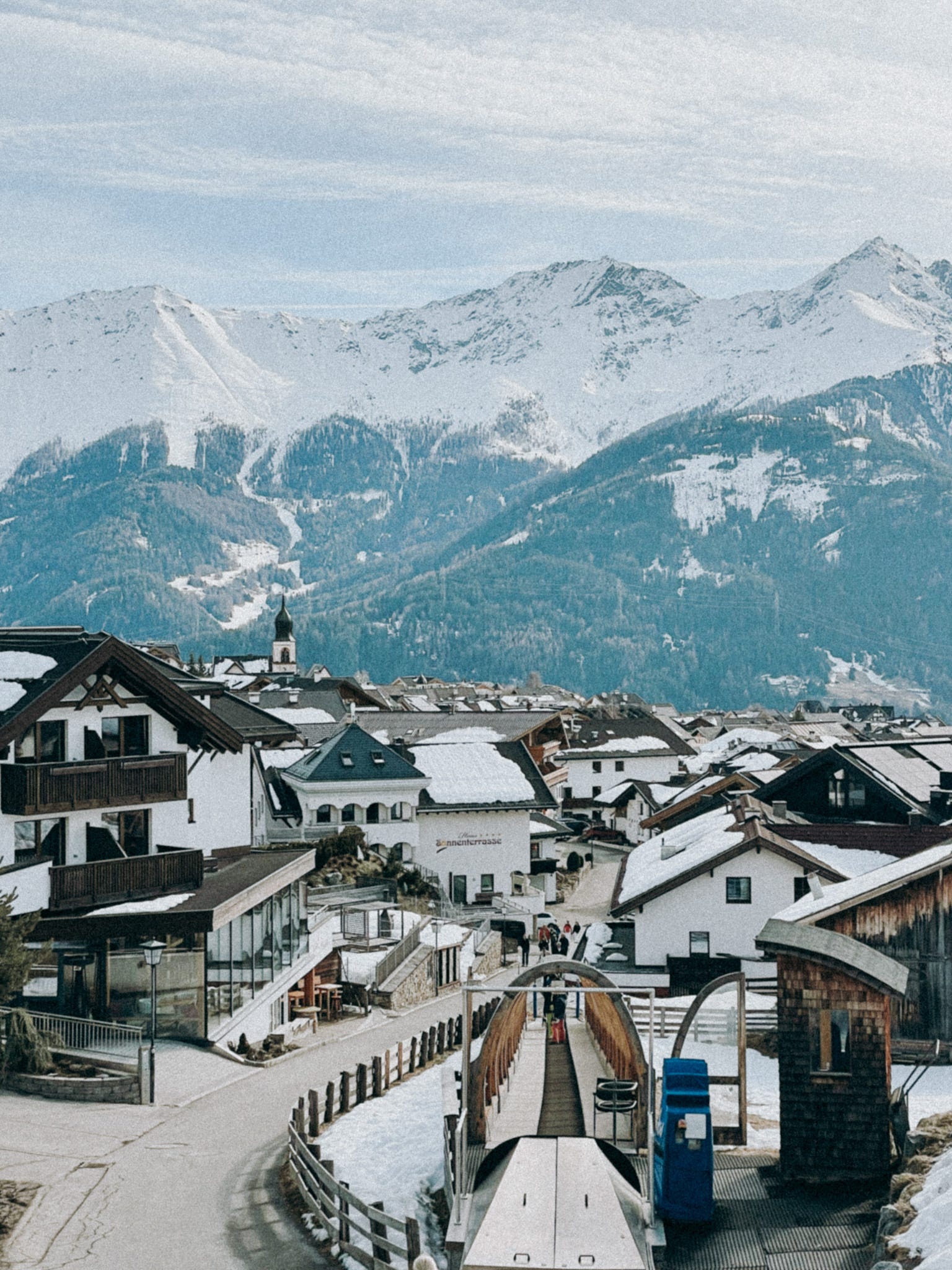
I looked at the mountains in the distance, tops capped with snow, majestic in the sunset light, and I felt something else besides pride.
Tiny seeds of a new idea sprouting, the promise of a possibility.
Love your writing! I for one will be very upset if you stop. This was so much fun to read, trying to think of things I can do outside my comfort zone...
Step by step. Word by word. We will be each other's scaffolding. Your writer friend, always. xoxo. J